Portable Toilets on Rent for Corporate Events in Boston
Planning a corporate event in Boston comes with a particular kind of logistics pressure. You are juggling schedules, vendors, staffing, power, permits, traffic patterns, and the weather, which can shift from crisp to wet without much warning. Bathrooms might sound like a minor detail until you are on-site, the crowd is building, and the line for “the one restroom nearby” is turning into a problem you cannot solve quickly.
That is where Porta Potty Rental Boston and portable toilet rental services become more than an afterthought. Done well, Portable Toilet Rental supports guest comfort, protects your venue from overflow problems, and keeps your event operations running without awkward interruptions.
Below is the practical way I think about portable toilets on rent for corporate events in Boston, including what to rent, what it costs in real terms, how to pick a vendor, and how to avoid the common issues that show up during setup.
When corporate events need portable restrooms (even if the venue has bathrooms)
Many corporate venues have restrooms, but “has restrooms” does not always mean “has capacity.” I’ve watched the math fail in ways that seem obvious only in hindsight.
If you are hosting a large reception, an outdoor event, a conference with back-to-back sessions, or an event that spills across multiple areas of a property, restroom demand can spike faster than people expect. The problem often shows up in the first hour, when attendees arrive in waves, network, then decide they need a restroom right at the same time.
Boston also has event realities that can make restroom access harder. Space is tight in many locations, and sidewalks and entrances can funnel guests toward the easiest facilities. If the event layout pulls people away from indoor bathrooms, your “nearby restroom” turns into a “long walk,” and long walks turn into complaints.
Weather is the other factor. Even if your event plan assumes “mostly dry,” Boston conditions can bring wind, mist, or sudden rain. Wet conditions reduce restroom availability in an indirect way. People avoid travel through weather. They also linger longer if they are uncomfortable, which increases restroom usage during peak periods.
Portable toilets help when you need redundancy. They are not a replacement for well-run indoor restrooms in every scenario, but they often prevent operational headaches when the venue’s baseline capacity is stretched.
Choosing the right portable toilet for a corporate crowd
Portable toilets are not all the same. The differences are about comfort, privacy, durability, odor control, and whether you can support accessibility requirements without improvising on the fly.
For corporate events, the biggest mistake is choosing the cheapest option when the guest experience matters. Cheap portable toilet rental can work for short, low-demand setups like early morning staff events, but corporate settings usually involve executives, clients, or employees who expect a certain level of cleanliness and privacy. If your portable toilets look or smell “temporary,” you have already created a distraction.
In Boston, that distraction is amplified by the city’s density and the way outdoor setups feel more visible. People notice what is placed near entrances, near catering stations, and along pedestrian paths.
Here are the main categories you’ll run into:
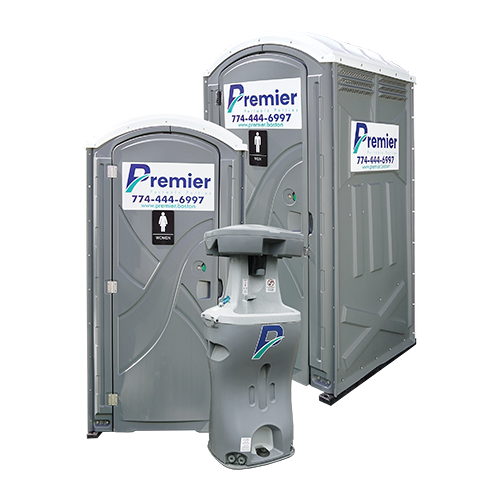
- Standard portable toilets: Basic units, typically used for straightforward outdoor events or when budget is the priority. They can still work for corporate events, but placement and service frequency matter.
- Handicapped accessible units: These are designed for mobility access and are commonly required when you have accessible needs. They are also wider and need appropriate placement space.
- Luxury or deluxe units: Some companies offer upgraded interiors, better privacy, enhanced lighting, and improved finishes. They cost more, but they reduce complaints and help the event feel intentional.
- Climate-mitigated setups: In cold or wet conditions, the differences show up in how units handle freezing temperatures and how waste management is maintained.
When you talk to portable toilet rental companies, ask directly what the unit is like in practice, not just what it is called. A “deluxe” toilet from one provider can be dramatically different from another. If you are unsure, request photos from recent Boston events and ask whether those units are serviced on the schedule you need.
The Boston reality: placement, access, and the “hidden” logistics
A portable toilet rental can be technically delivered and still be the wrong choice if the placement is off. Boston sites often have tight access routes, limited turning radius for delivery trucks, and strict rules about where equipment can sit.
Placement affects more than convenience. It affects odor control, guest behavior, and staff time. It can also affect whether the unit is usable during the event.
A few placement factors I consider every time:
-
Proximity to your highest-traffic routes
If people have to walk past other activities, they may avoid the restroom. Place it close to the path people already use, not hidden in a corner nobody wants to approach. -
Visibility without being intrusive
Guests want privacy, but they also want to find the unit easily. For corporate events, a discreet location that is still clearly signed usually performs better than “tucked away” placements. -
Surface and ground conditions
Grass, gravel, or uneven pavement can create stability issues. Many vendors can advise on mats or leveling, but you need the site information. If the unit tilts, it becomes harder to service and less comfortable to use. -
Access for servicing and pumping
This is the part people forget. Even if you place the toilet perfectly for guests, you still need a route for the delivery and the ongoing service. If the truck can’t access the unit safely, your event starts facing last-minute adjustments.
If you are organizing in an urban neighborhood, ask the vendor how they handle equipment placement relative to sidewalks and barriers. You do not want to learn about access restrictions after the truck shows up.
How many portable toilets do you actually need?
The “right number” depends on crowd size, event duration, and how restroom use scales with food and alcohol. There is no one magic formula that works for every corporate event, and reputable Portable Toilet Rental providers typically ask a few questions before recommending quantities.
When I estimate, I start with the simplest drivers:
- duration of the event
- whether alcohol is served
- whether food is heavy or snack-style
- whether restrooms are also available indoors
- whether the event is seated, standing, or mixed
A common mistake is assuming that because a venue has restrooms, you need fewer portable toilets. Sometimes that assumption holds up. Other times it fails because guests naturally congregate elsewhere during peak times, and the walk back inside becomes the bottleneck.
For larger corporate events, it is usually better to have enough capacity that you avoid long lines early, then adjust if you see usage patterns. If your event has a defined peak window, plan around that window rather than the entire event length.
If you are worried about getting the number wrong, talk to an emergency portable toilet rental provider. That term sounds like it’s only for sudden failures, but it can also mean they have faster response times for mid-event scaling if your attendance exceeds expectations or if something goes wrong with placement or service.
Costs and budget thinking without cutting corners
Pricing for Portable Toilet Rental can vary widely based on unit type, duration, frequency of service, and whether you need special handling for weather. Boston events often involve higher site and delivery complexity than some suburban setups, especially when access is limited.
You’ll see prices shaped by at least three cost categories:
-
Unit cost and duration
Longer rentals usually improve value, but you need to match the rental window to actual event needs. Don’t pay for extra days you do not need unless you also need setup or pickup time that overlaps with real logistics. -
Delivery, pickup, and placement labor
If your venue is hard to access, delivery and setup time can be a bigger factor. -
Service and waste handling frequency
This is the big one for corporate events. If you choose cheap portable toilet rental and then delay servicing too long, the unit experience turns into a problem. Odor and cleanliness issues show up earlier than people expect.
A practical way to budget is to treat restroom planning as part of guest experience, not just equipment. Corporate clients notice. Even if you “save” a few dollars upfront, a single service issue can trigger complaints, staff burnout, or last-minute changes.
If your budget is tight, you can often reduce cost without ruining the experience by using fewer units, but increasing service frequency or selecting a unit type that balances comfort with reliability. Ask the provider what trade-offs are possible before you commit.
What “emergency” means in real life
Emergency portable toilet rental often comes up when plans change. Maybe attendance increases. Maybe a venue contractor miscommunicates what was assumed. Maybe a setup area becomes unusable after rain.
The word emergency can lead people to think it is only for disasters, but in practice it can be used for time-sensitive adjustments. For example:
- You expected one wave of arrivals, then you got three.
- Your event schedule changed and the restroom demand shifted by an hour.
- A truck route was blocked temporarily, so the unit couldn’t be placed as planned.
When you call a provider, explain the situation in plain terms: event start time, current setup status, estimated crowd size, and where units need to go. Companies that handle these cases well usually have process control. They can tell you what is feasible quickly, what will take longer, and what the safest workaround is for the site constraints.
If you are planning ahead, you will rarely need emergency action. But building a contingency into your plan helps you keep control if something shifts.
Accessibility and compliance considerations
Corporate events often include attendees with varying mobility needs. Even when the event is not strictly a “public event,” guest accessibility still matters. Portable toilets should support accessible usage, and that typically means including an appropriately designed accessible unit.
I do not recommend assuming a standard unit will work for everyone. That approach creates real friction for guests and puts your event staff in an awkward position.
Ask your vendor how accessible units are handled and how they ensure the unit can be reached from the main event path. The portable toilet is only useful if guests can approach it safely, with sufficient path clearance and appropriate footing. Boston sidewalks, temporary walkways, and event flooring can change access quickly, especially in wet conditions.
If you are unsure about requirements for your specific event, ask your event counsel or organizer, then align the restroom plan with those guidance points. A good portable toilet rental company will be comfortable discussing layout and accessibility planning without acting like you are inconveniencing them.
Vendor selection: how to choose portable toilet rental companies that won’t disappoint you
Not all portable toilet rental companies operate the same way. Some are great at sales but weaker on service logistics. Others are strict about service schedules and site requirements, which can feel inconvenient during planning, but it is the difference between a smooth event and a stressful one.
When I evaluate vendors for a corporate gig, I focus on whether they can answer questions clearly and specifically. Vague answers are a warning sign.
A few practical questions to ask:
- What service frequency do you recommend based on our crowd size and event length?
- Can you confirm delivery and pickup times, not just rental dates?
- What happens if the event runs longer or attendance increases?
- How do you handle cleaning, odor control, and restocking of consumables?
- Do you provide handwashing solutions, and what are the requirements for water or placement?
Some providers include handwashing stations as part of their standard setups. Others treat it as add-on equipment. For corporate events, I strongly prefer including handwashing. The guest experience improves, and it reduces the “we are managing hygiene from a corner of the venue” feeling.
A short planning checklist that saves real time
Before you finalize anything, it helps to lock the details in writing. Here’s the practical checklist I use with corporate clients and internal event teams.
- Confirm estimated attendance, event duration, and whether alcohol or heavy food is served
- Share the venue map and the exact placement area, including ground type and access route for delivery trucks
- Ask the provider to recommend unit count based on those inputs, not a generic rule of thumb
- Verify service frequency, consumable restocking, and who is responsible for any event-day coordination
- Discuss contingency options for emergency portable toilet rental if attendance or weather changes
That list might look simple, but it prevents the most common failure points, especially https://www.911getit.com/united-states/east-bridgewater/business-marketing-analytics/premier-portable-potties the mismatch between what the event thought it ordered and what the site can actually support.
Signage, guest flow, and how corporate events actually behave
Portable toilets are not just a facility, they are part of your guest flow. Corporate events tend to have clear behavioral patterns. People line up near food. They cluster near check-in. They move between sessions.
If you place portable toilets in a way that breaks guest flow, you can reduce usage until it spikes in the wrong moment. That increases the likelihood of lines and complaints.
Signage is a small detail that changes everything. Clear directional signage, even basic directional signs placed at the right decision points, helps guests find the restrooms quickly. You can also coordinate with venue staff so you are not competing instructions like “restrooms are over there” when the portable options are placed closer.
At outdoor events, wind and rain can affect visibility. If you are using pop-up structures, ensure signage does not get blocked by lighting towers or tent supports. A sign that is technically “placed” but not readable from where guests decide to turn can be as useless as no sign at all.
Weather prep in Boston: what changes in cold or rain
Boston weather makes the restroom experience a lot more sensitive to planning. Rain affects everything about the ground and access routes. Cold affects how units manage waste and how comfortable they feel for guests.
If your event is seasonal, ask your provider what they do for weather conditions. Some companies can advise on best placement and whether additional measures are recommended for freezing temperatures. For rain, they may recommend mats or leveling to prevent pooling and improve access.
One caution from experience: do not treat weather as only a “comfort” variable. Poor weather prep can cause access problems for servicing. If servicing becomes difficult, odor control and cleanliness can degrade fast, and that is when you start hearing complaints.
What to expect on event day: setup, service, and communication
A smooth event usually has quiet operational work happening in the background. Your attendees are not seeing it, which is exactly how it should be.
When delivery arrives, the vendor should confirm the placement locations and make sure the units are stable and accessible. For a corporate event, you want setup to happen without disrupting your main vendor operations. That requires coordination, especially if you have catering trucks, entertainment load-in, or equipment placement happening around the same time.
On service, the vendor should handle cleaning and consumables. If you are using handwashing stations, confirm how they are supplied and maintained. The last thing you want is a handwashing station running low while guests are still arriving.
Communication matters. If your event manager knows the vendor point of contact and the expected service windows, you are less likely to get surprise issues. The best portable toilet rental companies feel organized, even when they are busy.
Trade-offs you should think about before you rent
Every rental decision is a trade-off. The question is whether you are willing to accept the cost in one area to gain it in another.
- Choosing standard units can reduce costs, but you may need more units to prevent lines during peak use.
- Choosing deluxe units can improve guest comfort, but you will want to protect them from being placed in a high-traffic or messy area.
- Using fewer units reduces placement footprints, but it increases the importance of service frequency.
- Relying on venue restrooms only can work if your event is small or well-timed, but it fails when guests disperse into multiple activity zones.
For corporate events, guest experience is often tied directly to how quickly needs are met. Portable toilets should reduce friction, not add it.
Real-world scenarios in Boston corporate settings
Let me paint a few scenarios that match what I see in the field. These are not “official facts,” they are patterns that show up frequently.
For a morning leadership breakfast held in a downtown building with strong indoor restroom access, you might only need a small number of portable toilets for overflow, especially if the event includes a pre-function check-in area that draws people out of the main restroom zone.
For an outdoor product launch on a street-adjacent space, indoor restrooms might be available but far enough that people avoid the walk when it is wet or windy. In that situation, portable toilets near the entrance and near the photo area can noticeably reduce lines and complaints.
For a multi-hour company offsite with sessions and breaks, demand spikes between sessions, especially if snacks and coffee are served. Portable toilets placed on the same side of the event flow as the break areas usually reduce bottlenecks.
If you are planning a corporate event with a client-facing component, I would rather over-plan slightly than under-plan and scramble later. Boston is not a place where you can easily fix logistics mid-event without costing time and trust.
Frequently asked questions corporate teams actually bring up
Are portable toilets appropriate for corporate events?
They can be, and when chosen thoughtfully they feel normal, even expected. The key is selecting the right unit type, keeping them clean through the service schedule, and placing them where guests can access them comfortably. A corporate crowd responds to cleanliness and privacy.
Is “cheap portable toilet rental” a bad idea?
Not necessarily. It becomes a bad idea when cheap units are paired with inadequate service frequency or poor placement. If budget is tight, talk to the rental company about workable alternatives, like fewer units but higher service attention, or choosing a unit that offers better privacy and comfort.
What if we are unsure about attendance?
This is where communication with portable toilet rental companies matters. Provide your best estimate, ask how they adjust service and quantity, and confirm whether emergency portable toilet rental options are available if attendance increases.
How to place and sign portable toilets for the best guest experience
You do not need elaborate installations, but you do need deliberate placement.
Place portable toilets where guests naturally travel, usually near high-traffic nodes like entrances, reception areas, and main break zones. Avoid isolating them in spots that require a “decision” to walk off the main path. If you can, keep a clear, dry route from where guests exit tents or doorways to where they can approach the unit.
Signage should be simple and direct. If you can’t fit signs at multiple decision points, prioritize the most important ones. A sign at the primary fork in guest movement beats a sign placed only where guests already know they can find the restroom.
If your corporate event includes valet or controlled access, coordinate with whoever manages the entry so portable toilet placement does not create congestion near check-in.
The bottom line: restroom planning is risk management
Portable toilets on rent might look like a minor procurement task, but for corporate events in Boston they function like risk management. They reduce lines, protect guest comfort, and keep your event staff from absorbing operational stress at the worst time.
If you are comparing options, remember that Porta Potty Rental Boston is not a single product category. It is a network of decisions: unit type, service schedule, placement logistics, and responsiveness. The best outcomes happen when the rental company understands your event flow, not just your rental dates.
When you plan early, ask the right questions, and choose a vendor that can support your site realities, Portable Toilet Rental stops feeling like an emergency measure. It becomes part of the event you can count on, even when Boston weather, timing, and guest behavior do what they always do.
If you want, tell me your event month, approximate guest count, portable toilets to rent indoor versus outdoor portions, and whether alcohol or heavy catering is involved. I can help you think through a realistic unit mix and the kinds of questions to ask when you contact porta potty rental companies.
Premier Portable Potties
35 Industrial Dr, East Bridgewater, MA 02333, United States
(774) 444-6997
[email protected]
website: https://www.premier.boston/